DoorDash Cuts Chat Abuse in Half With Hybrid AI Pipeline
DoorDash developed a hybrid AI safety system that cut verbal abuse incidents by 50 percent, proving that combining small internal models with LLMs can scale moderation affordably.
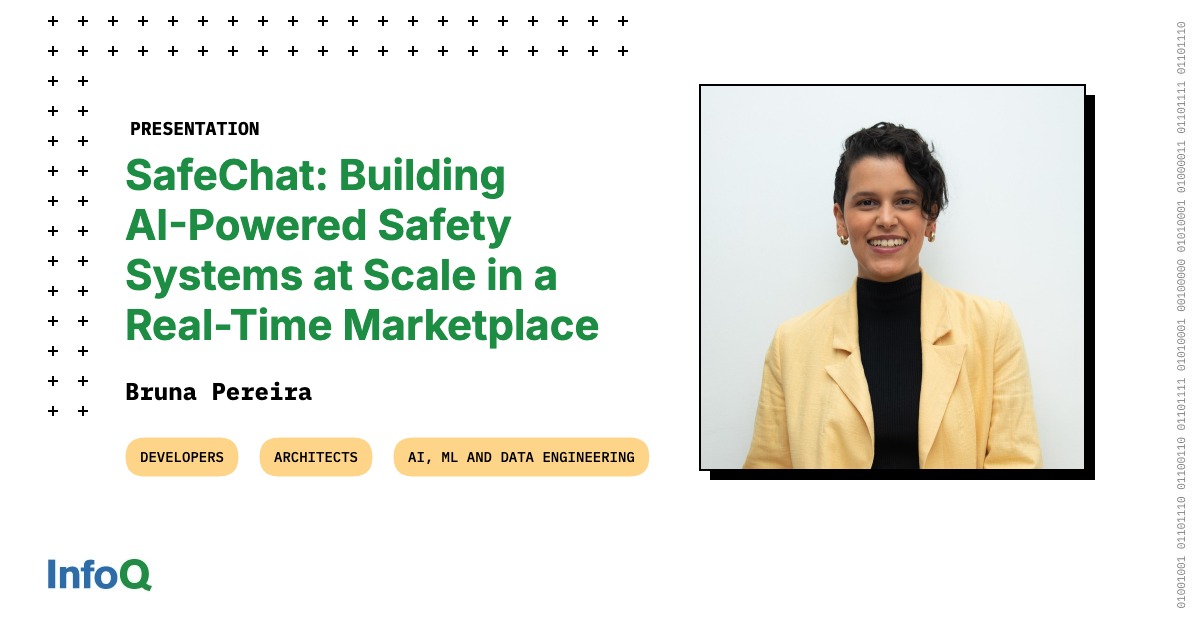
DoorDash software engineer Bruna Pereira revealed how the delivery giant designed and scaled SafeChat, a hybrid content moderation system that reduced verbal abuse incidents on the platform by approximately 50 percent. Handling a daily volume of over four million chat messages, 400,000 voice calls, and 200,000 images, the company could not rely on large language models alone. Standard LLM calls introduced a prohibitive latency of two to ten seconds and extreme operational costs if queried for every transaction.
To solve this, DoorDash analyzed its data to find that only a small, single-digit percentage of messages were actually unsafe. The team built a fast, cheap internal classifier to filter out obviously safe messages. This first-layer model costs nothing per call and responds in under 100 milliseconds at the 90th percentile. Only the remaining ten percent of ambiguous messages are routed to an LLM. Instead of asking the LLM for a simple binary safety judgment, the system prompts it to score content across multiple axes, such as threat level, profanity, and sexual content. This scoring allows DoorDash to take graduated actions, ranging from censoring minor swearing to canceling orders and banning offenders for high-severity threats.
Following the success of SafeChat, DoorDash transitioned the architecture into a content-agnostic moderation platform. Using a no-code user interface, other internal teams can now build custom moderation workflows without writing new code. The platform utilizes three building blocks: internally hosted models, external vendor APIs, and external prompts managed through an LLM gateway. This gateway handles fallback and retry strategies to maintain system health when external providers fail.
For AI practitioners, the DoorDash architecture highlights the value of putting a cheap, specialized model in front of expensive LLMs for high-volume pipelines. It also demonstrates that requesting numerical scores rather than boolean labels from LLMs yields more stable, flexible moderation thresholds. Finally, the platform includes a built-in backtesting framework, allowing developers to test new prompts against historical data and calculate precision metrics before deploying them to production.
This is our own summary of reporting by InfoQ AI

%22%3E%0A%3Cstop%20offset%3D%220%25%22%20stop-color%3D%22%23233043%22%2F%3E%3Cstop%20offset%3D%22100%25%22%20stop-color%3D%22%234c6180%22%2F%3E%0A%3C%2FlinearGradient%3E%3C%2Fdefs%3E%0A%3Crect%20width%3D%22800%22%20height%3D%22500%22%20fill%3D%22url(%23g)%22%2F%3E%0A%3Cg%20stroke%3D%22%23ffffff%22%20stroke-opacity%3D%220.10%22%20stroke-width%3D%222%22%3E%0A%3Cline%20x1%3D%22-200%22%20y1%3D%22500%22%20x2%3D%22100%22%20y2%3D%220%22%2F%3E%3Cline%20x1%3D%22-60%22%20y1%3D%22500%22%20x2%3D%22240%22%20y2%3D%220%22%2F%3E%3Cline%20x1%3D%2280%22%20y1%3D%22500%22%20x2%3D%22380%22%20y2%3D%220%22%2F%3E%3Cline%20x1%3D%22220%22%20y1%3D%22500%22%20x2%3D%22520%22%20y2%3D%220%22%2F%3E%3Cline%20x1%3D%22360%22%20y1%3D%22500%22%20x2%3D%22660%22%20y2%3D%220%22%2F%3E%3Cline%20x1%3D%22500%22%20y1%3D%22500%22%20x2%3D%22800%22%20y2%3D%220%22%2F%3E%3Cline%20x1%3D%22640%22%20y1%3D%22500%22%20x2%3D%22940%22%20y2%3D%220%22%2F%3E%3Cline%20x1%3D%22780%22%20y1%3D%22500%22%20x2%3D%221080%22%20y2%3D%220%22%2F%3E%0A%3C%2Fg%3E%0A%3Ctext%20x%3D%2248%22%20y%3D%22430%22%20font-family%3D%22Helvetica%2CArial%2Csans-serif%22%20font-size%3D%22132%22%20font-weight%3D%22800%22%0A%20fill%3D%22%23ffffff%22%20fill-opacity%3D%220.22%22%20letter-spacing%3D%22-4%22%3ETD%3C%2Ftext%3E%0A%3C%2Fsvg%3E)

