Isovalent Uses eBPF to Control Kubernetes AI Traffic
Isovalent advocate Dan Finneran demonstrated how platform teams can use eBPF kernel hooks to transparently monitor and secure AI API traffic in Kubernetes without altering application code.
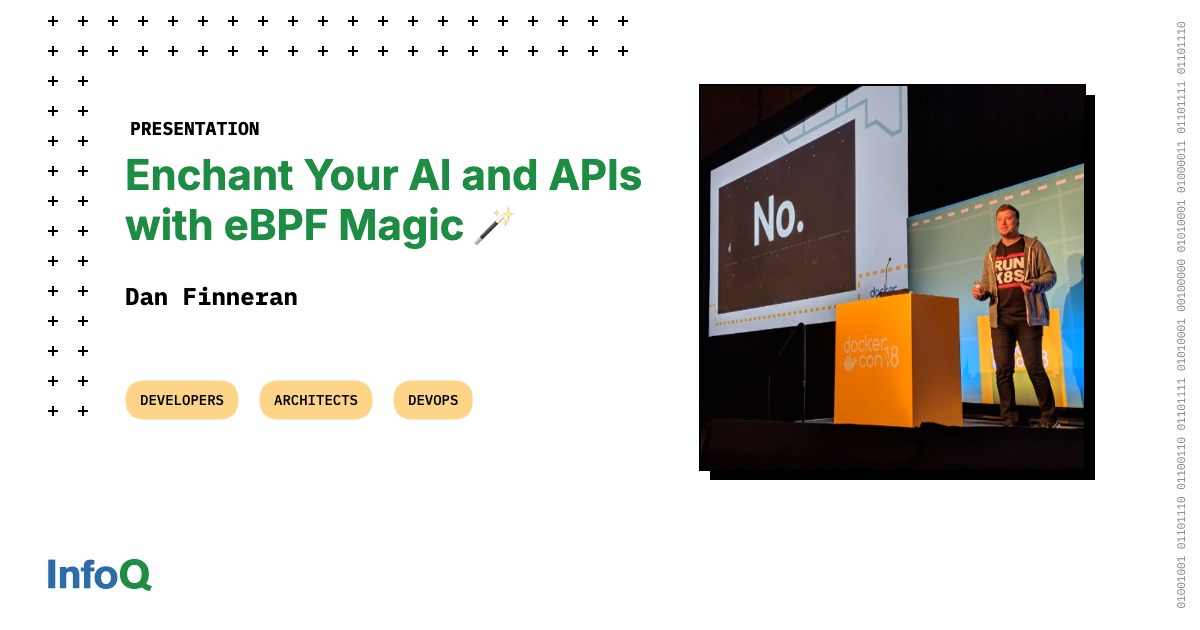
Isovalent, a subsidiary of Cisco, has demonstrated a proof-of-concept AI gateway that leverages eBPF to intercept and secure LLM API traffic within Kubernetes clusters. Presented by Isovalent principal community advocate Dan Finneran, the approach addresses the growing operational risks of unowned, AI-generated code and autonomous agents running in production environments. By utilizing kernel-level socket hooks, the system can transparently filter prompts, swap models, enforce token limits, and restrict system calls without requiring developers to modify their application source code or restart active containers.
The rise of rapid AI prototyping has led to a disconnect where organizations deploy code they do not fully understand or support. Finneran warned that autonomous AI agents can execute disastrous commands, such as running rm -r * to wipe directories or triggering accidental infrastructure destruction. Additionally, unsecured endpoints are vulnerable to prompt poisoning, which can lead to massive token bills or unintended behaviors, such as a Chipotle customer service chatbot being manipulated into generating Python code.
To mitigate these risks, the proof of concept uses eBPF, an open-source technology integrated into the Linux kernel since 2014. Operating on Linux kernels version 5.12 or newer, eBPF makes the operating system kernel dynamically programmable. Instead of relying on heavy virtual machines or modifying application code, practitioners can attach eBPF programs to the networking stack. This allows the system to transparently redirect traffic from an AI agent to a userland proxy.
For Kubernetes platform architects, this technology provides a non-invasive control plane. It enables real-time observation of JSON payloads moving to and from LLM backends, such as OpenAI or Claude. Practitioners can dynamically enforce security policies, block malicious requests, and cap token usage at the kernel level, ensuring that rogue AI agents cannot compromise production systems or inflate cloud costs.
This is our own summary of reporting by InfoQ AI

%22%3E%0A%3Cstop%20offset%3D%220%25%22%20stop-color%3D%22%23233043%22%2F%3E%3Cstop%20offset%3D%22100%25%22%20stop-color%3D%22%234c6180%22%2F%3E%0A%3C%2FlinearGradient%3E%3C%2Fdefs%3E%0A%3Crect%20width%3D%22800%22%20height%3D%22500%22%20fill%3D%22url(%23g)%22%2F%3E%0A%3Cg%20stroke%3D%22%23ffffff%22%20stroke-opacity%3D%220.10%22%20stroke-width%3D%222%22%3E%0A%3Cline%20x1%3D%22-200%22%20y1%3D%22500%22%20x2%3D%22100%22%20y2%3D%220%22%2F%3E%3Cline%20x1%3D%22-60%22%20y1%3D%22500%22%20x2%3D%22240%22%20y2%3D%220%22%2F%3E%3Cline%20x1%3D%2280%22%20y1%3D%22500%22%20x2%3D%22380%22%20y2%3D%220%22%2F%3E%3Cline%20x1%3D%22220%22%20y1%3D%22500%22%20x2%3D%22520%22%20y2%3D%220%22%2F%3E%3Cline%20x1%3D%22360%22%20y1%3D%22500%22%20x2%3D%22660%22%20y2%3D%220%22%2F%3E%3Cline%20x1%3D%22500%22%20y1%3D%22500%22%20x2%3D%22800%22%20y2%3D%220%22%2F%3E%3Cline%20x1%3D%22640%22%20y1%3D%22500%22%20x2%3D%22940%22%20y2%3D%220%22%2F%3E%3Cline%20x1%3D%22780%22%20y1%3D%22500%22%20x2%3D%221080%22%20y2%3D%220%22%2F%3E%0A%3C%2Fg%3E%0A%3Ctext%20x%3D%2248%22%20y%3D%22430%22%20font-family%3D%22Helvetica%2CArial%2Csans-serif%22%20font-size%3D%22132%22%20font-weight%3D%22800%22%0A%20fill%3D%22%23ffffff%22%20fill-opacity%3D%220.22%22%20letter-spacing%3D%22-4%22%3ETD%3C%2Ftext%3E%0A%3C%2Fsvg%3E)

