MIT Uses Gemini 2.5 Pro to Predict Your Next Words
MIT researchers have built an AI system that analyzes weeks of smartwatch-recorded conversations to predict a user's next verbal response, paving the way for highly proactive personal assistants.
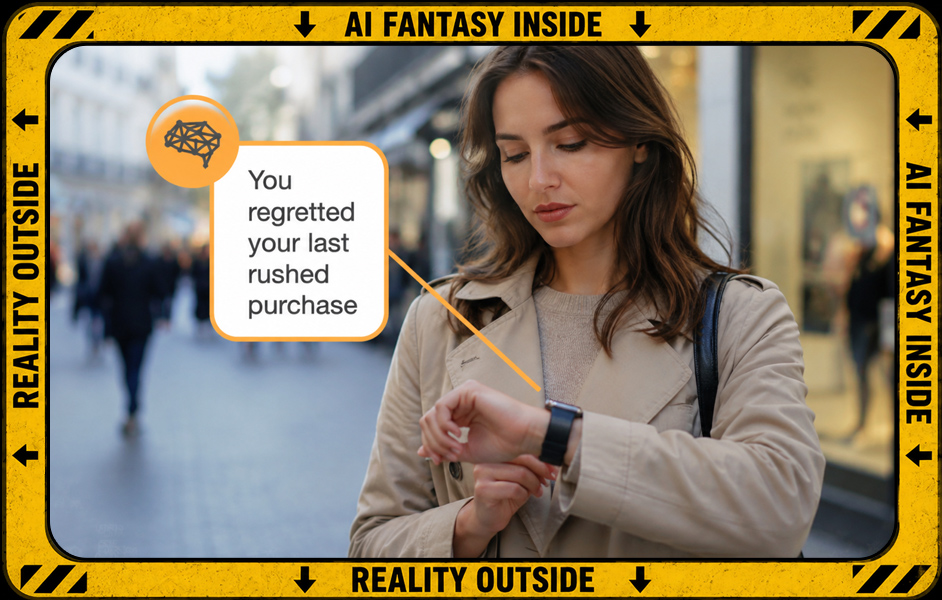
Researchers at MIT have developed a predictive system that learns recurring behavioral patterns from a user's daily conversations. In a field study, 14 English-speaking participants wore smartwatches for seven to ten days, capturing over 1,000 hours of real-world audio. Participants, who were compensated $100, had to obtain consent from interlocutors. An on-device voice-activity detector recorded two-to-three minute clips, which were transcribed and diarized using Deepgram's Nova-3-meeting model. SpeechBrain verified the wearer's voice against a 20-second sample, and spaCy Named Entity Recognition anonymized personal details before the audio was deleted and transcripts were stored with AES-256-GCM encryption.
After participants reviewed the transcripts, deleting just 0.16 percent and flagging 2.48 percent as misclassified, the final dataset contained 15,066 utterances, averaging 49 words each. Wearers accounted for 57 percent of these, while other speakers made up 43 percent. After removing short exchanges and disfluencies, the dataset was refined to 9,901 utterances. The system, based on a workflow called Mind Mapper, used a multi-stage GPT-5 pipeline to generate context-dependent if-then behavioral rules.
To test the system, researchers tasked Gemini 2.5 Pro with predicting the next conversational response. GPT-5 served as an automated judge, which was validated by 40 independent human raters. The pattern-based approach outperformed baseline methods, with human raters ranking it highest in 43 percent of scenarios, compared to 24 percent for full context, 18 percent for zero-shot, and 15 percent for narrative summaries. Furthermore, when testing on 114 habits that participants wanted to break across 912 conversational moments, the pattern-based method outperformed standard approaches by approximately 40 percent.
For AI practitioners, this development demonstrates that longitudinal, highly localized personal data can be structured into human-readable rules to dramatically improve predictive accuracy without relying on massive, generic datasets. It proves that combining specialized models like SpeechBrain and spaCy with advanced LLMs can create secure, edge-friendly pipelines. Additionally, the close alignment between GPT-5 and human raters validates the use of LLMs as reliable automated judges for complex, subjective conversational behavior.
This is our own summary of reporting by Unite.AI


%22%3E%0A%3Cstop%20offset%3D%220%25%22%20stop-color%3D%22%231a1c1c%22%2F%3E%3Cstop%20offset%3D%22100%25%22%20stop-color%3D%22%234c4546%22%2F%3E%0A%3C%2FlinearGradient%3E%3C%2Fdefs%3E%0A%3Crect%20width%3D%22800%22%20height%3D%22500%22%20fill%3D%22url(%23g)%22%2F%3E%0A%3Cg%20stroke%3D%22%23ffffff%22%20stroke-opacity%3D%220.10%22%20stroke-width%3D%222%22%3E%0A%3Cline%20x1%3D%22-200%22%20y1%3D%22500%22%20x2%3D%22100%22%20y2%3D%220%22%2F%3E%3Cline%20x1%3D%22-60%22%20y1%3D%22500%22%20x2%3D%22240%22%20y2%3D%220%22%2F%3E%3Cline%20x1%3D%2280%22%20y1%3D%22500%22%20x2%3D%22380%22%20y2%3D%220%22%2F%3E%3Cline%20x1%3D%22220%22%20y1%3D%22500%22%20x2%3D%22520%22%20y2%3D%220%22%2F%3E%3Cline%20x1%3D%22360%22%20y1%3D%22500%22%20x2%3D%22660%22%20y2%3D%220%22%2F%3E%3Cline%20x1%3D%22500%22%20y1%3D%22500%22%20x2%3D%22800%22%20y2%3D%220%22%2F%3E%3Cline%20x1%3D%22640%22%20y1%3D%22500%22%20x2%3D%22940%22%20y2%3D%220%22%2F%3E%3Cline%20x1%3D%22780%22%20y1%3D%22500%22%20x2%3D%221080%22%20y2%3D%220%22%2F%3E%0A%3C%2Fg%3E%0A%3Ctext%20x%3D%2248%22%20y%3D%22430%22%20font-family%3D%22Helvetica%2CArial%2Csans-serif%22%20font-size%3D%22132%22%20font-weight%3D%22800%22%0A%20fill%3D%22%23ffffff%22%20fill-opacity%3D%220.22%22%20letter-spacing%3D%22-4%22%3ETD%3C%2Ftext%3E%0A%3C%2Fsvg%3E)
