Munder Difflin lets developers run AI clones of themselves
Open-source platform Munder Difflin has launched an agent harness that wraps existing command-line AI tools to let developers run secure, self-coordinating clones of themselves.
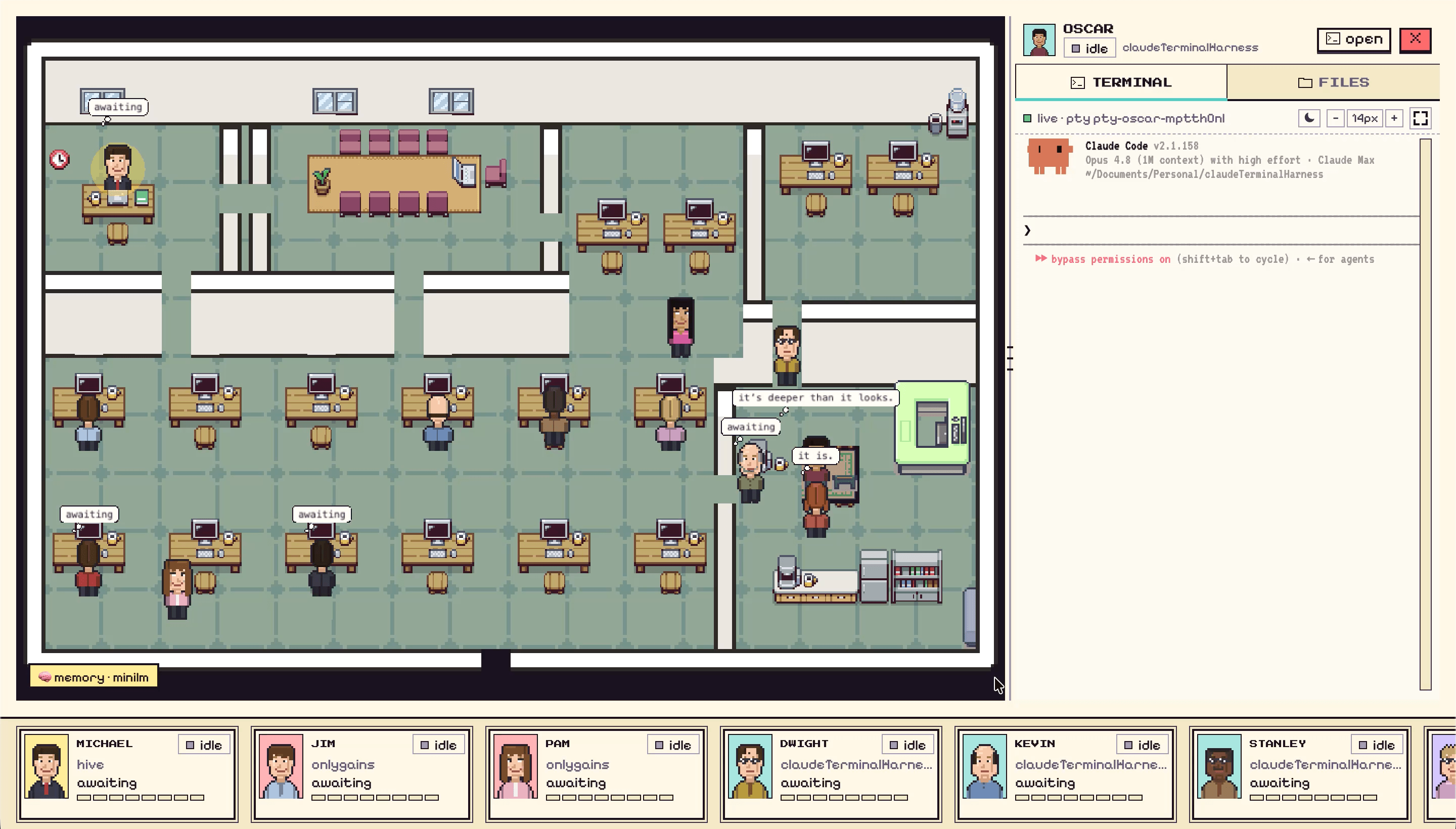
Munder Difflin has released version 0.4.5 of its MIT-licensed agent harness, designed to run personalized AI clones directly on a developer's laptop. The tool wraps around existing command-line interface agents that practitioners already use, including Claude Code, Codex, Grok, Kimi Code, Gemini CLI, Antigravity, Qwen, OpenCode, Crush, Pi, Copilot, and Cursor. By capturing an individual's specific workflow, tooling, and knowledge, the software spins up clones that can control the computer to review pull requests, fix bugs, ship small features, and audit design systems.
Unlike shared team bots, these clones act as individual nodes that communicate directly with one another. When one clone gets blocked, it can message a teammate's clone to hand off work and share context. This clone-to-clone messaging is end-to-end encrypted using X25519 and AES-256-GCM, meaning plaintext data only exists inside the local nodes on the users' machines. The system is private by architecture, allowing users to decide what context remains personal and what gets shared with the team-wide knowledge base.
While the application is free for individuals running locally, Munder Difflin offers paid plans to keep clones running 24/7 when laptops are closed. The free app sandbox provides a shared CPU, 1GB of RAM, and 20GB of storage. Upgrading to the Teams PRO plan, which scales from 10 to over 100 seats, grants each member a dedicated sandbox VM with a shared 8x CPU, 8GB of RAM, and 100GB of storage. A one-time $20 Founding Supporter tier is also available, offering a permanent brass plaque and 50 percent off the PRO plan plus one free month. The latest v0.4.5 release introduces accurate cost reporting, semantic memory on Apple Silicon, and more reliable agent messaging.
For developers and software teams, this architecture shifts the paradigm of AI assistance from passive autocomplete to active, asynchronous delegation. Instead of waking up to open questions, engineers return to finished threads and pull requests that have already been reviewed according to their specific standards. By automating routine tasks like triaging issues, updating documentation, and chasing CRM follow-ups, practitioners can focus on high-level architecture while their encrypted clones handle the daily operational grind around the clock.
This is our own summary of reporting by Hacker News